Building a deposition workflow around the attorney's own practice
LegalEase Solutions built the Litigation Workflow Assistant, an attorney-facing application scoped specifically for deposition preparation. The MVP (Most Viable Product) was delivered as a fixed-scope, approximately two-week build, based on an interactive prototype that allowed the client to validate the workflow before engineering began.
The workflow was designed around two core capabilities. A Style & Consistency Engine learned from the attorney's prior deposition scripts, standard template, and drafting samples, while a Deposition Document Generator processed case materials, preserved citation metadata, and produced a reviewable question bank before generating the final script.
- The workflow created a reusable style profile from the attorney's prior work product, templates, and drafting samples
- Captured the attorney's outline structure, headings, questioning style, formatting, numbering conventions, tone, and reusable language
- Processed uploaded case materials using document, paragraph, section, heading, transcript, and discovery boundaries while preserving citation metadata
- Generated a reviewable question bank with each question linked to its purpose, source citation, topic, relevance, witness, and priority
- Organized questions chronologically and topically
- Flagged gaps requiring attorney judgment or additional case facts rather than generating unsupported language
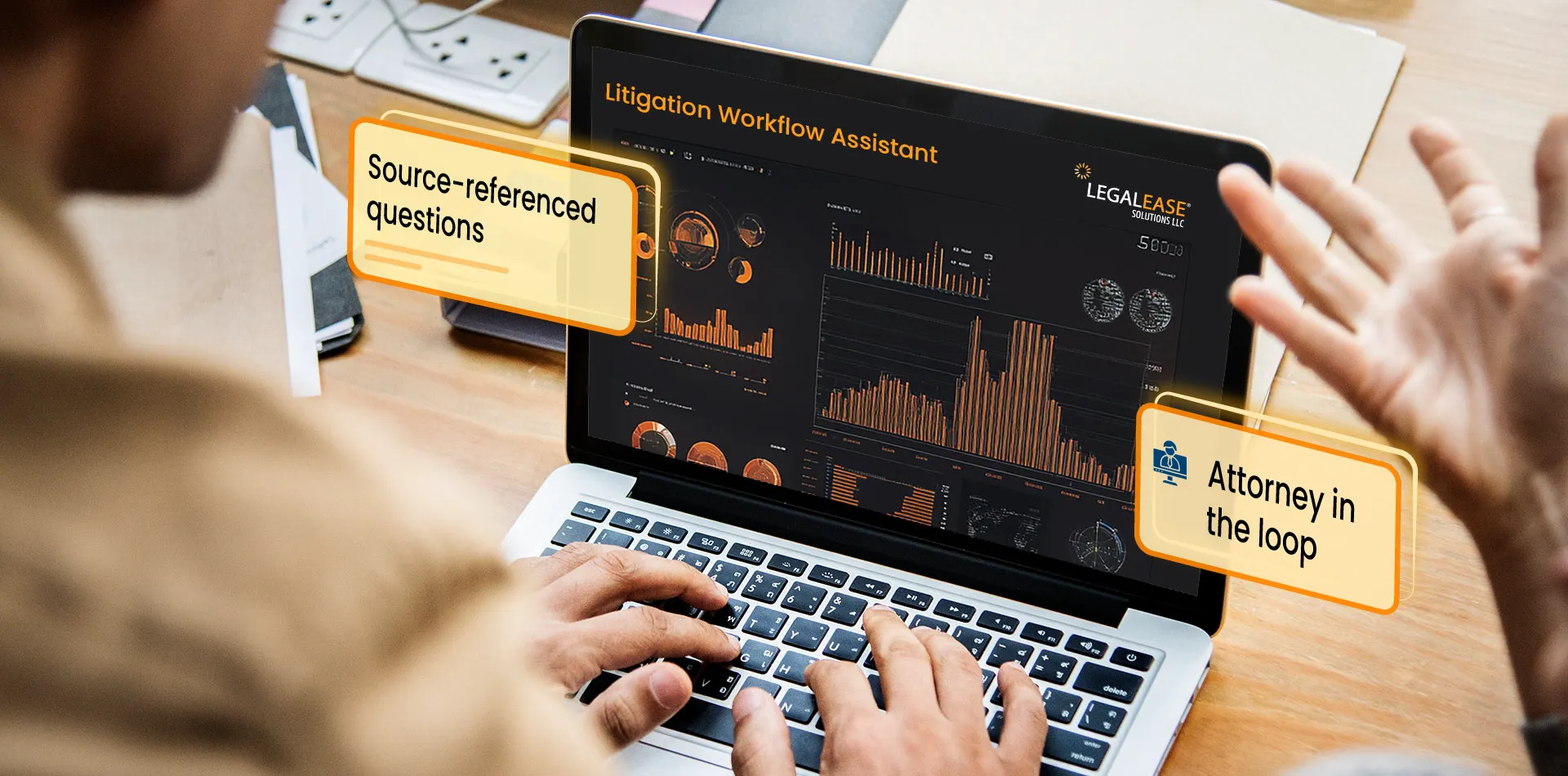
- Linked each question to its supporting evidence through a dual-panel review workspace
- Enabled the attorney to reorder, edit, add, delete, and renumber questions while preserving citation metadata
- Exported reviewed outlines to Word, PDF, or HTML
A line of safeguards kept the attorney in control of every output
The Litigation Workflow Assistant operated strictly in review and approval mode. It did not finalize, file, serve, or send documents, provide legal advice, or make litigation strategy decisions.
Every deliverable passed through attorney review before export, and the attorney could edit any word. We also provided an added layer of service with a dedicated LegalEase attorney who validated each output so that the client didn’t have to keep going back and worry about the accuracy of the drafts.
Case materials were treated as confidential throughout the process, with privacy-focused processing configurable for the engagement. It also supported de-identified or redacted source sets.


.svg)